
Time Changes Manager
The Time Changes Manager lets you define a congregation's repeating meeting time pattern. This is useful for congregations that share a Kingdom Hall and rotate their weekend meeting time.
Once configured, the application automatically keeps the congregation's meeting time up to date and ensures reports display the correct meeting time for assignments.
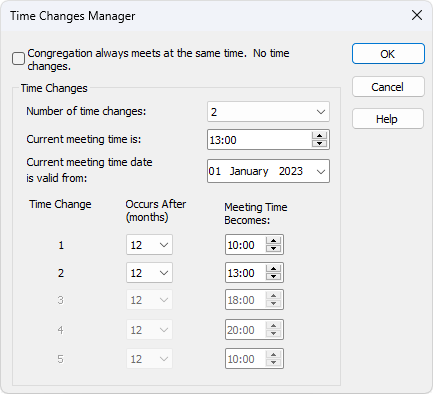
Figure 44. The Time Changes Manager window.
How to Access
You can open the Time Changes Manager from the Congregations Database window by clicking the clock button next to the congregation's meeting time.
Congregation Always Meets at the Same Time
Enable this option if the congregation no longer rotates its meeting time.
When selected, the Meeting Time field on the Congregations window becomes available again because the Time Changes Manager is no longer managing the meeting time.
Number of Time Changes
Select how many different meeting times the congregation cycles through. You can choose between 2 and 5 meeting times.
Additional controls are enabled as required.
For example, if the congregation alternates between 10:00 and 14:00, select 2.
Current Meeting Time
Displays the congregation's current meeting time in 24-hour format. This value matches the Meeting Time shown on the Congregations window.
Once the time change pattern has been configured, the application updates this value automatically.
Current Meeting Time Valid From
Select the date from which the current meeting time became effective.
The application uses this date to calculate future meeting time changes. Once configured, this value is updated automatically.
Time Change Information
Define each meeting time in the cycle. The number of rows displayed depends on the number of meeting times you selected.
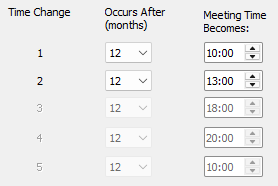
Figure 45. Example of defined meeting time changes.
For each meeting time:
- Specify the number of months until the next meeting time.
- Enter the meeting time in 24-hour format.
Each change is relative to the previous one. For example, if the interval is 12 months, the next meeting time takes effect one year later.
The application automatically maintains the sequence as each meeting time change occurs.
Navigation
- Parent topic: Congregation Manager
- Previous topic: Hyperlinks